Ministry of Magic
The Ministry of Magic is the central governing authority of the British wizarding community, charged with enforcing magical law, regulating magical creatures and artifacts, and concealing the magical world from Muggles. In Harry Potter and the Prisoner of Azkaban, the Ministry is a pervasive presence, its policies and personnel shaping the story's central conflicts. Its actions reveal an institution often more concerned with public image and political convenience than with justice or the well-being of individuals.
Structure and Key Personnel
The Ministry is a large bureaucracy with numerous departments. The Minister of Magic, Cornelius Fudge, is its head, a portly, nervous man who is easily swayed by public opinion and powerful figures like Lucius Malfoy. Other key departments mentioned include the Accidental Magic Reversal Department, which handles magical mishaps like Harry's inflation of Aunt Marge; the Misuse of Muggle Artifacts Office, headed by Arthur Weasley; the Magical Law Enforcement Squad, which deals with dangerous criminals; and the Committee for the Disposal of Dangerous Creatures, a body that oversees the fate of magical beasts. The Ministry also operates Azkaban, the wizard prison, and employs the Dementors as guards.
The Ministry's Response to Sirius Black
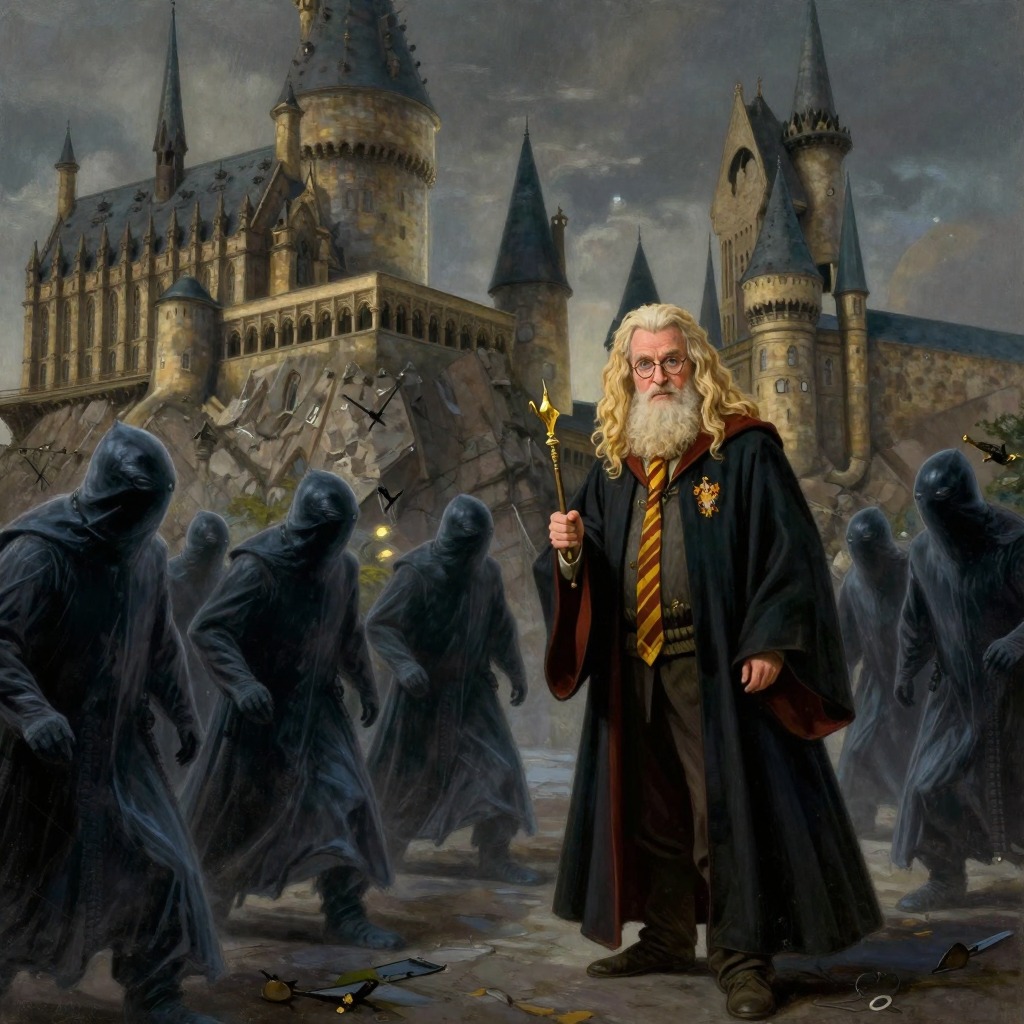
The Ministry's primary concern in this book is the recapture of Sirius Black, a mass murderer who has escaped from Azkaban. Their response is characterized by panic and a reliance on extreme measures. Fudge personally informs the Muggle Prime Minister of the crisis, a move criticized by the International Federation of Warlocks. The Ministry stations Dementors at every entrance to Hogwarts, a decision that creates a climate of fear and directly endangers students, as Harry's collapse on the Hogwarts Express and during a Quidditch match demonstrates. Fudge himself is present at the school, and his relief at finding Harry alive after his flight from the Dursleys leads him to overlook Harry's illegal magic, a leniency born of political necessity rather than principle. The Ministry's obsession with capturing Black is so great that it authorizes the Dementors to perform the Dementor's Kiss—the complete removal of a soul—on him, a punishment that horrifies even the more thoughtful members of the wizarding community.
Injustice and the Committee for the Disposal of Dangerous Creatures
The Ministry's capacity for injustice is starkly illustrated in the case of Buckbeak the Hippogriff. After Draco Malfoy deliberately insults the creature and is injured, his father, Lucius Malfoy, uses his influence to pressure the Committee for the Disposal of Dangerous Creatures. Despite Hagrid's attempts to mount a defense, the Committee, described as being "in Lucius Malfoy's pocket," upholds the complaint and sentences Buckbeak to death. The execution is scheduled with a grim efficiency, and the Ministry sends an executioner, Walden Macnair, to carry it out. Fudge himself attends, treating the execution as an unpleasant but necessary duty. This episode reveals how easily the Ministry's official processes can be corrupted by wealth and social standing, prioritizing the comfort of the powerful over the lives of the innocent.
The Ministry's Failure and Fallibility
Ultimately, the Ministry's entire campaign against Sirius Black is a catastrophic failure. Their belief in Black's guilt is absolute, based on eyewitness testimony and the word of a traitor, Peter Pettigrew. They never question the official story, and their reliance on the Dementors—creatures that feed on despair and cannot distinguish between guilt and innocence—proves to be a profound error. The Dementors nearly administer the Kiss to an innocent Harry, an act that finally forces Fudge to order their removal from Hogwarts. The Ministry is outmaneuvered at every turn: Sirius Black escapes from Azkaban, breaks into Hogwarts, and ultimately flees to freedom on Buckbeak, who has also been rescued. The Ministry's power is shown to be brittle, its authority undermined by its own incompetence, corruption, and a fundamental lack of wisdom. Fudge's final, panicked suggestion of using dragons to guard the school underscores the Ministry's reliance on brute force rather than intelligent solutions.
Narrative Significance
The Ministry of Magic functions as a key antagonist in the novel, representing a system of authority that is not only flawed but actively harmful. Its actions create the central dangers Harry faces: the Dementors, the unjust execution of Buckbeak, and the relentless pursuit of an innocent man. The Ministry's failure to see the truth forces Harry, Ron, and Hermione to take justice into their own hands, using the Time-Turner to rescue both Sirius and Buckbeak. This act of rebellion against the established order cements the trio's role as agents of true justice, operating outside a system that has proven itself unworthy of trust. The Ministry's portrayal in this book establishes a critical view of institutional power that will deepen throughout the series.